Different facilities, the same need for organized records.
Each organization has its own operating rhythm, but recurring fire-safety recordkeeping usually has the same pressure points: locations, status, deficiencies, photos, and reviewable history.
Private schools
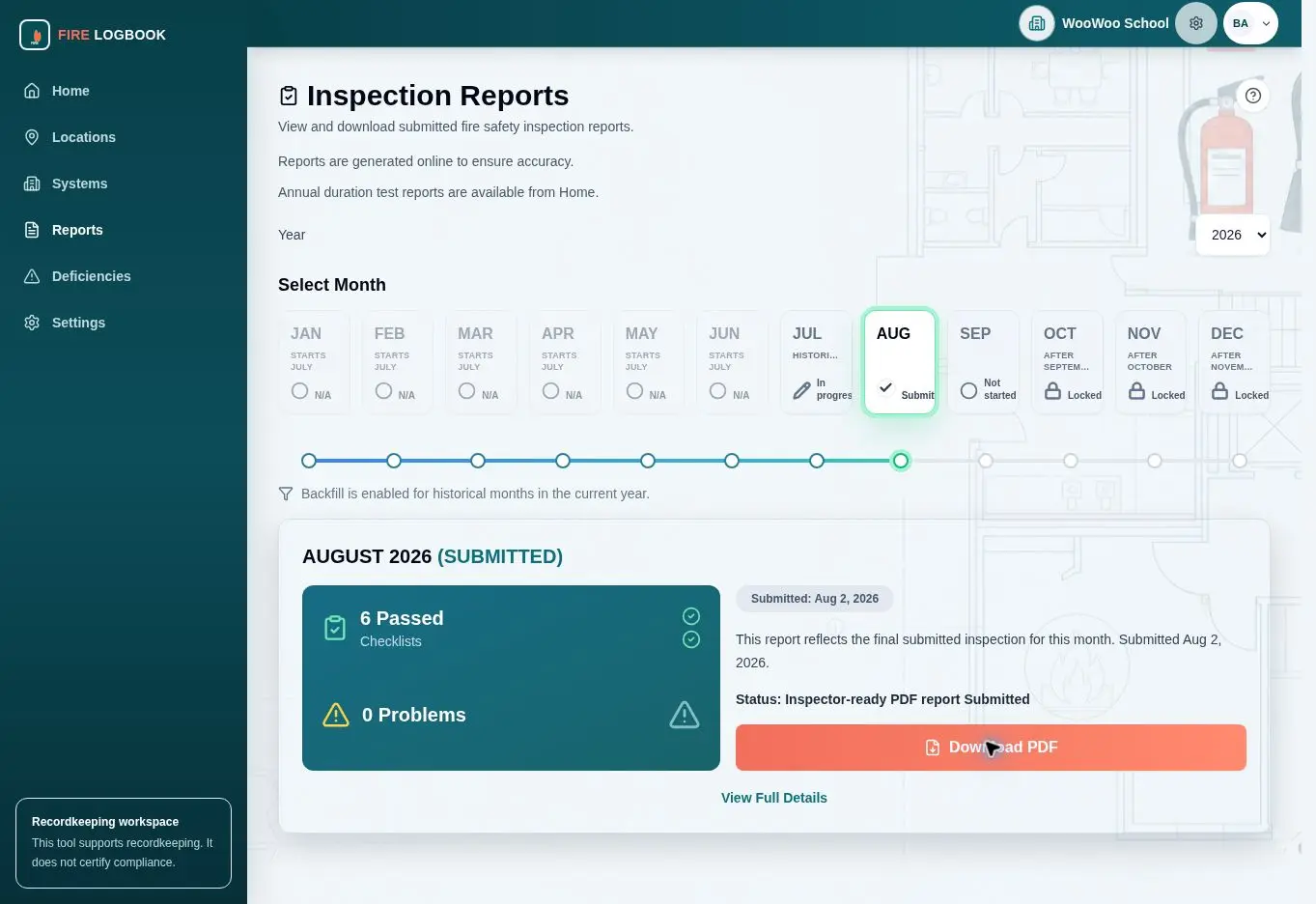
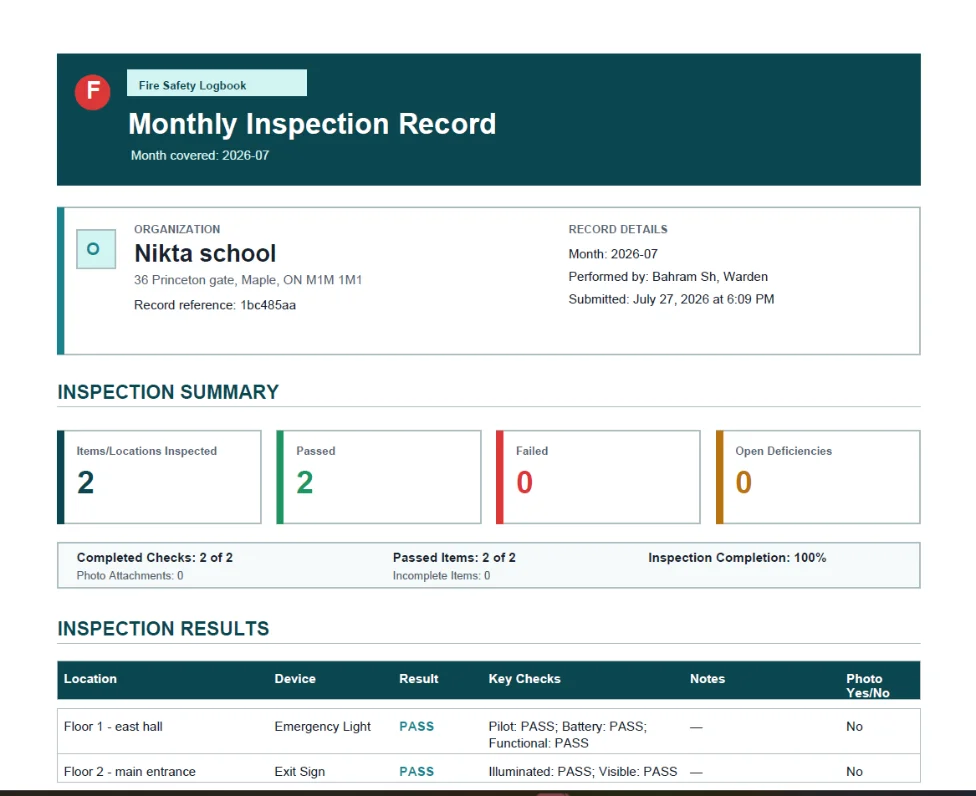
Private schools can keep fire drill participation, evacuation timing, observations and follow-up alongside recurring checks, deficiencies, photos and downloadable monthly records across their locations. NiktaFire gives administrative and facility staff a clearer place to record checks, flag failed items, attach photos, and prepare inspection history without searching through binders.
Daycares and childcare centres
Childcare owners, directors and administrators can organize fire drill records, recurring checks, deficiencies, photos and downloadable monthly records by location. Explore NiktaFire for Ontario childcare centres. NiktaFire helps staff document recurring checks by room or area, keep issue notes together, and reduce the need to collect photos and handwritten updates after the fact.
Community centres
Community centres may have multiple rooms, public areas, and staff or volunteer handoffs. NiktaFire supports a consistent monthly workflow so inspection status and deficiency context are easier to review when responsibility shifts between people.
Places of worship
Places of worship often rely on a mix of staff, committees, and volunteers. NiktaFire helps keep recurring fire-safety records in a shared digital structure, with locations, notes, and monthly history available when leadership needs to review what was recorded.
Small commercial and multi-tenant buildings
Property teams can organize monthly checks by building, floor, common area, tenant space, or equipment location. NiktaFire keeps status, failed-item notes, and photos connected to the record instead of spreading them across email, spreadsheets, and paper.
Facility managers and property teams
Facility managers need repeatable processes that survive staff changes and busy operating days. NiktaFire creates a practical workflow for completing checks, reviewing outstanding issues, and downloading monthly records when needed.